


Tightening quotas for HCFC and HFC production and import in Vietnam

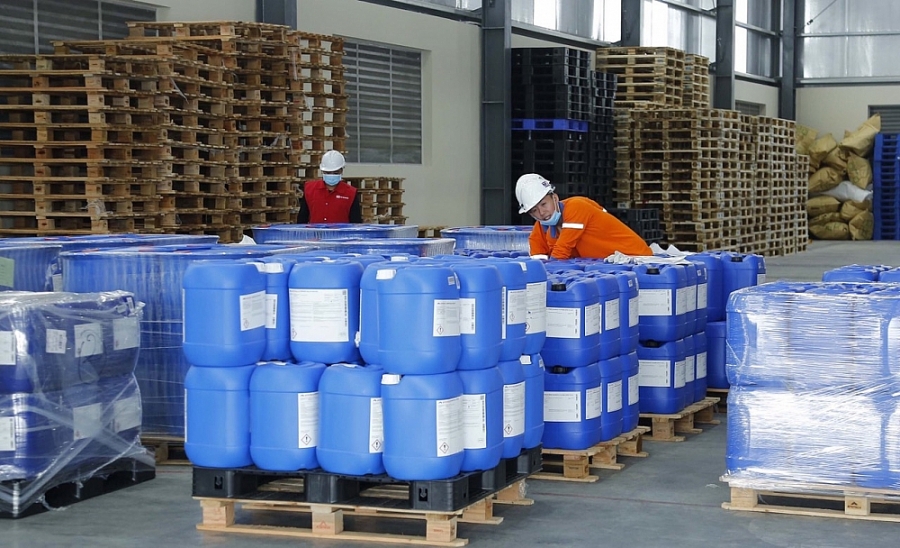
In the context of Vietnam accelerating the implementation of international commitments on ozone layer protection and greenhouse gas emission reduction, quotas for the production and import of HCFCs and HFCs are being increasingly tightened. The legal framework for this control is established under Decree No. 06/2022/ND-CP dated January 7, 2022, as amended and supplemented by Decree No. 119/2025/ND-CP dated June 9, 2025, and Decree No. 83/2026/ND-CP dated March 23, 2026.
Roadmap for managing controlled Ozone-Depleting substances and Greenhouse Gases
Under the National Plan on the management and phase-out of controlled ozone-depleting substances (ODS) and greenhouse gases, issued under Decision No. 496/QD-TTg dated June 11, 2024 by the Prime Minister, national consumption of HCFCs will be gradually reduced from 1,300 tons per year during the 2024–2029 period (equivalent to a 67.5% reduction), to no more than 100 tons per year during 2030–2039, and completely phased out by 2040.
For HFCs, national consumption is also controlled under a gradual reduction roadmap, from a baseline cap of 13.9 million tons of CO₂ equivalent (for the 2024–2028 period) to a maximum of 20% of the baseline level by 2045 (equivalent to no more than 2.8 million tons of CO₂ equivalent).
Responsibilities for collection, recycling, and treatment of Refrigerants
The roadmap for reducing refrigerant consumption is becoming increasingly stringent, while demand for socio-economic development continues to grow. Therefore, implementing effective solutions for recovery, recycling, and reuse of refrigerants from existing equipment has become essential.
According to current regulations, from 2024, organizations owning large-scale equipment (air conditioners with a nominal cooling capacity of 90,000 BTU/h or more, or industrial refrigeration equipment with electrical capacity of 40 kW or more) are required to collect controlled substances when such equipment or products are no longer in use.
From 2028, manufacturers and importers of products and equipment containing or produced from controlled substances, including smaller-scale equipment, will also be directly responsible for the collection, recycling, and treatment of these substances.
The collection of controlled substances is mandatory. After collection, organizations are encouraged to recycle and reuse them. If recycling or reuse is not feasible, the substances must be destroyed in accordance with regulations on hazardous waste management.
Transition trends toward environmentally friendly refrigerants
Alongside collection, recycling, and treatment activities, the transition toward environmentally friendly refrigerants is becoming increasingly evident. Typical alternatives include HFOs (Hydrofluoroolefins) such as R1234yf and R1234ze, as well as natural refrigerants like R290 (Propane), R600a (Isobutane), R744 (CO₂), and R717 (Ammonia – NH₃), etc.
However, selecting and transitioning to new refrigerants requires careful research and evaluation to ensure suitability with practical conditions. At the same time, a well-defined transition roadmap is necessary to improve system efficiency, minimize risks, and reduce operational waste.
Related Articles:
Amendment to the Decree on Greenhouse Gas Emission Reduction and Ozone Layer Protection
Featured posts